LLM SEO is the practice of optimizing your content and brand presence so large language models — ChatGPT, Gemini, Claude, Perplexity — cite you, recommend you, and describe you accurately in their answers. It works through two channels: the training data a model learned from, and the live web results it retrieves when answering. If traditional SEO earns you a ranking, LLM SEO earns you a mention in the answer itself.
This guide covers what LLM SEO actually is (and how it relates to GEO, AEO, and LLMO), how the major engines pick their sources, the seven tactics that move the needle, how to measure progress, and a 90-day plan you can start this week. Last updated July 2, 2026.
LLM SEO vs AEO vs GEO vs LLMO: what’s the difference?
Here is the honest answer most acronym-led marketing avoids: these four terms largely describe the same discipline. The industry has not settled on one label, so agencies and tools use whichever sounds most current. The differences are emphasis, not method — and the underlying playbook (answer-shaped content, entity consistency, structured data, presence on trusted sources) is identical across all of them.
| Term | Stands for | Emphasis | Typical scope |
|---|---|---|---|
| LLM SEO | SEO for large language models | Umbrella term — being visible wherever LLMs answer | Training data + retrieval + brand accuracy |
| AEO | Answer engine optimization | Winning direct answers: AI Overviews, featured snippets, voice | Content structure, schema, question-format pages |
| GEO | Generative engine optimization | Overall brand presence in generated answers | Citations, reviews, third-party mentions, authority signals |
| LLMO | Large language model optimization | The technical layer: training corpora, retrieval, grounding | Entity disambiguation, structured data, high-signal sources |
Use whichever term your team prefers — the work is the same. We break down the search-behavior side of this in AEO vs SEO, and the tool landscape in our guide to the best AI visibility tools.
How do LLMs decide what to cite?
There are two distinct paths into an AI answer, and they reward different work. Most LLM SEO advice fails because it treats them as one.
Path 1: training data (slow, compounding)
Models learn about brands from the text they were trained on — Wikipedia, Reddit, GitHub, news archives, documentation, forums, and the broader crawled web. If your brand appears consistently across those surfaces, associated with the same category and claims, the model “knows” you and can recommend you even without searching. This channel is slow: your mentions only reach the model when it is retrained or refreshed, which can take months. But it compounds — and it is why brands with years of consistent presence get named unprompted while newer brands do not.
Path 2: retrieval (fast, rankable)
When an engine searches the live web before answering — retrieval-augmented generation, or RAG — it pulls from a conventional search index. As publicly documented as of mid-2026: ChatGPT Search draws on Bing’s index (crawled by OAI-SearchBot), Gemini and AI Overviews ground on Google’s Search index, Perplexity operates its own index via PerplexityBot, and Claude’s search uses Brave. The practical consequence: if your page ranks in Bing or Google and answers the question in a liftable, quotable block, it can be cited within weeks — no retraining required.
On what gets cited once retrieved: the Princeton-led GEO research (Aggarwal et al., presented at KDD 2024) tested nine optimization methods across 10,000 queries and found that adding statistics, quotations, and cited sources improved visibility in generative answers by up to roughly 40% — evidence that answer-shaped, well-sourced writing genuinely outperforms generic copy in AI answers.
The LLM SEO tactics checklist
1. Nail entity consistency everywhere
Your brand name, category description, and core claims should be word-for-word consistent across your site, LinkedIn, Crunchbase, G2, product directories, and social bios. LLMs resolve brands as entities; conflicting descriptions (“social media tool” here, “content platform” there) dilute the association. Pick one sentence that defines you and repeat it everywhere.
2. Write answer-shaped content
Lead every page and section with a direct, self-contained answer of 2–3 sentences, then elaborate. Use question-format H2s, definition blocks, and tables — the structures LLMs lift most cleanly. If a paragraph cannot be quoted on its own and still make sense, it will not be quoted.
3. Ship structured data and an llms.txt file
Add Organization, Article, and FAQPage schema so machines can parse who you are and what each page answers. An llms.txt file (a markdown summary of your site for AI crawlers) is a proposed convention with unproven direct impact — but it costs ten minutes, so ship it and move on. Keep pages server-rendered and crawlable; JavaScript-only content is a gamble with AI crawlers.
4. Get into training-data-heavy surfaces
Reddit, GitHub, Stack Overflow-style communities, Wikipedia-adjacent references, and established directories are disproportionately represented in training corpora and in retrieval results. Genuine participation — answering questions in your niche subreddits, maintaining public repos, earning directory listings — plants your brand where models actually learn.
5. Win listicle presence
When someone asks an LLM “best X tools,” the engine frequently synthesizes existing “best of” roundups rather than forming its own opinion. Getting included in the top-ranking listicles for your category is one of the highest-leverage LLM SEO moves available — pitch the authors, offer data, or publish your own honest comparison.
6. Keep content fresh for retrieval
Retrieval favors pages that look current: visible “last updated” dates, current-year references, and refreshed stats. A quarterly refresh pass over your money pages often beats publishing net-new content for RAG-driven citations.
7. Engineer brand + keyword co-occurrence
Models associate brands with topics through repeated co-occurrence: your name appearing near “AI content generation for founders” across dozens of pages teaches the association. Every guest post, podcast show-note, comparison page, and social post that pairs your brand with your target category strengthens it. This is why consistent multi-platform publishing cadence is itself an LLM SEO tactic.
How do you measure LLM visibility?
You cannot pull an “AI rankings” report the way you pull a Google Search Console export, but measurement is no longer guesswork. Two approaches, in order of cost:
Manual prompt audits (free). Write 20–30 prompts your buyers would actually ask (“best AI content tool for solo founders,” “how do I repurpose a blog post for LinkedIn”) and run them monthly across ChatGPT, Gemini, Perplexity, and Claude. Log which brands are named, whether you are cited, and whether the description of you is accurate. Trend it in a spreadsheet.
Share-of-voice tools (paid). As of mid-2026 the main options — pricing changes quickly, so verify current plans:
| Tool | What it does | Pricing (indicative, mid-2026) |
|---|---|---|
| Profound | Enterprise AI answer monitoring and share of voice | Custom / enterprise |
| Otterly.AI | Prompt-based brand and link tracking across AI engines | Entry plans in the tens of dollars/mo |
| Ahrefs Brand Radar | AI mentions, citations, and share of voice inside Ahrefs | Included with Ahrefs plans |
| Semrush AI toolkit | AI visibility and brand perception tracking | Add-on to Semrush plans |
Expect timelines to differ by channel: retrieval-driven citations can move in 60–90 days; training-data presence moves over 6–12 months. We compare these platforms in depth in the best AI visibility tools.
What LLM SEO can’t do
- It can’t force a citation. There is no submission form and no paid placement. You improve probabilities; the model decides.
- It can’t beat model refresh lag. Work you do today may not appear in a model’s trained knowledge for months, and providers do not publish refresh schedules.
- It can’t guarantee consistency across engines. ChatGPT, Gemini, Perplexity, and Claude use different indexes and weightings — being cited in one says little about the others. Per-engine work like Perplexity SEO and getting cited by ChatGPT still matters.
- It can’t fix a weak content foundation. If your pages do not rank in Bing or Google, retrieval-augmented engines cannot find them either. LLM SEO extends SEO; it does not bypass it.
The 90-day LLM SEO plan
| Phase | Focus | Actions |
|---|---|---|
| Weeks 1–2 | Baseline + technical hygiene | Run a 20–30 prompt audit across four engines and log results. Fix entity consistency across site, socials, and directories. Ship Organization/Article/FAQPage schema and llms.txt. Confirm AI crawlers are not blocked in robots.txt. |
| Month 1 | Answer-shaped content | Rewrite your 5–10 highest-intent pages answer-first with question H2s and tables. Publish 2–4 new pages targeting question queries in your category. Add visible updated dates. |
| Months 2–3 | Distribution + co-occurrence | Pitch inclusion in the top 5 listicles for your category. Participate genuinely on Reddit and niche communities. Ship consistent multi-platform posts pairing your brand with your target keywords. Re-run the prompt audit at day 60 and day 90 and compare. |
FAQ
Is LLM SEO the same as GEO?
In practice, yes. LLM SEO, GEO, AEO, and LLMO describe the same goal — getting AI systems to cite, recommend, and accurately describe your brand — with different emphasis. AEO leans toward answer boxes, GEO toward brand presence in generated answers, LLMO toward training and retrieval mechanics. The tactics converge on one playbook.
Do backlinks matter for LLM SEO?
Yes, indirectly. Retrieval-augmented engines lean on Bing and Google indexes, where links still drive rankings, and linked mentions spread your brand across pages that feed training data. A link from a page LLMs already cite — a ranked listicle or a popular Reddit thread — beats a generic directory link.
How long does LLM SEO take to show results?
Retrieval-side citations can move in weeks once a page ranks and answers cleanly; expect measurable movement in 60–90 days. Training-data-side brand knowledge moves over 6–12 months, gated by model refresh cycles you cannot control.
What is llms.txt and do I need one?
It’s a proposed convention: a markdown file at your domain root summarizing your site for AI crawlers. Adoption is not guaranteed and impact is unproven — treat it as a ten-minute, low-risk addition, not a strategy. Schema markup and crawlable HTML are the higher-confidence technical plays.
Should I do LLM SEO instead of traditional SEO?
No — do both, because they share a foundation. AI answers are built on top of search indexes, so a page that can’t rank can’t be retrieved. Write answer-shaped, entity-consistent content once and let it serve both classic SERPs and AI answers. See AEO vs SEO for the full comparison.
Which tools track LLM visibility and citations?
Profound (enterprise, custom pricing), Otterly.AI (entry plans in the tens of dollars/mo), Ahrefs Brand Radar (inside Ahrefs plans), and the Semrush AI toolkit (add-on) — pricing changes fast, so verify current plans. The free alternative is a monthly manual prompt audit across ChatGPT, Gemini, Perplexity, and Claude.
The bottom line
LLM SEO is not a trick — it is consistency at scale. The brands that get cited are the ones whose name, category, and claims appear the same way across hundreds of pages, month after month, in content shaped like answers. One great article does little; fifty consistent, answer-shaped pieces across your blog and social platforms teach every model who you are.
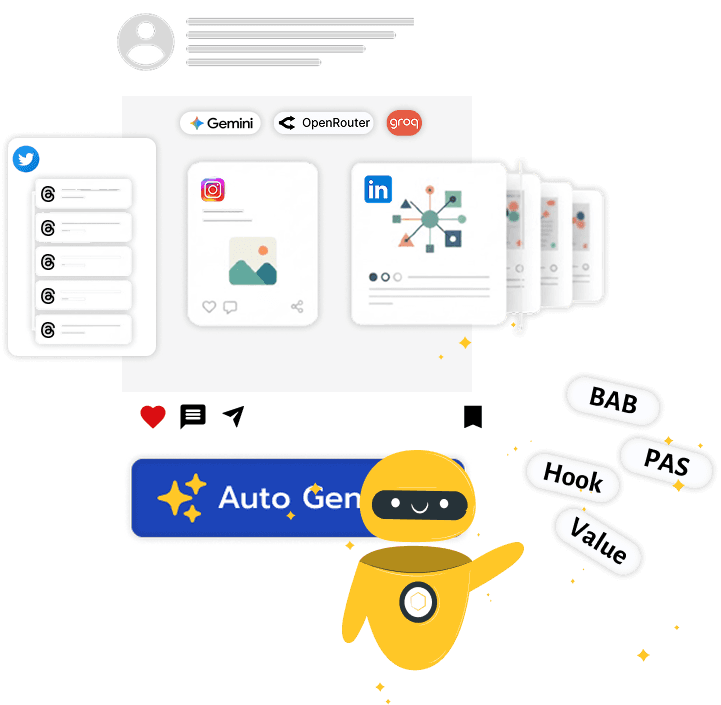
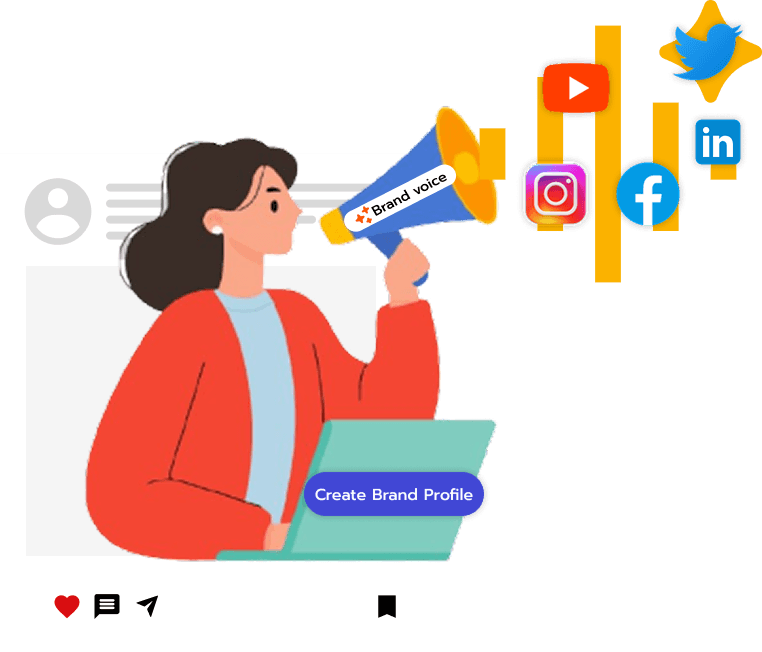
That cadence is exactly what Growthrik AI is built for: it learns your brand voice from your own posts, generates platform-native content in 10 format variations, and handles scheduling, repurposing, and humanizing — so one idea becomes a week of consistent, brand-voiced, answer-shaped presence. Plans start at $19/mo with a 60-day money-back guarantee. See pricing and start feeding the models a consistent story.